
Landscaping
5 Small Yard Landscape Design Ideas That Actually Work in Real Backyards
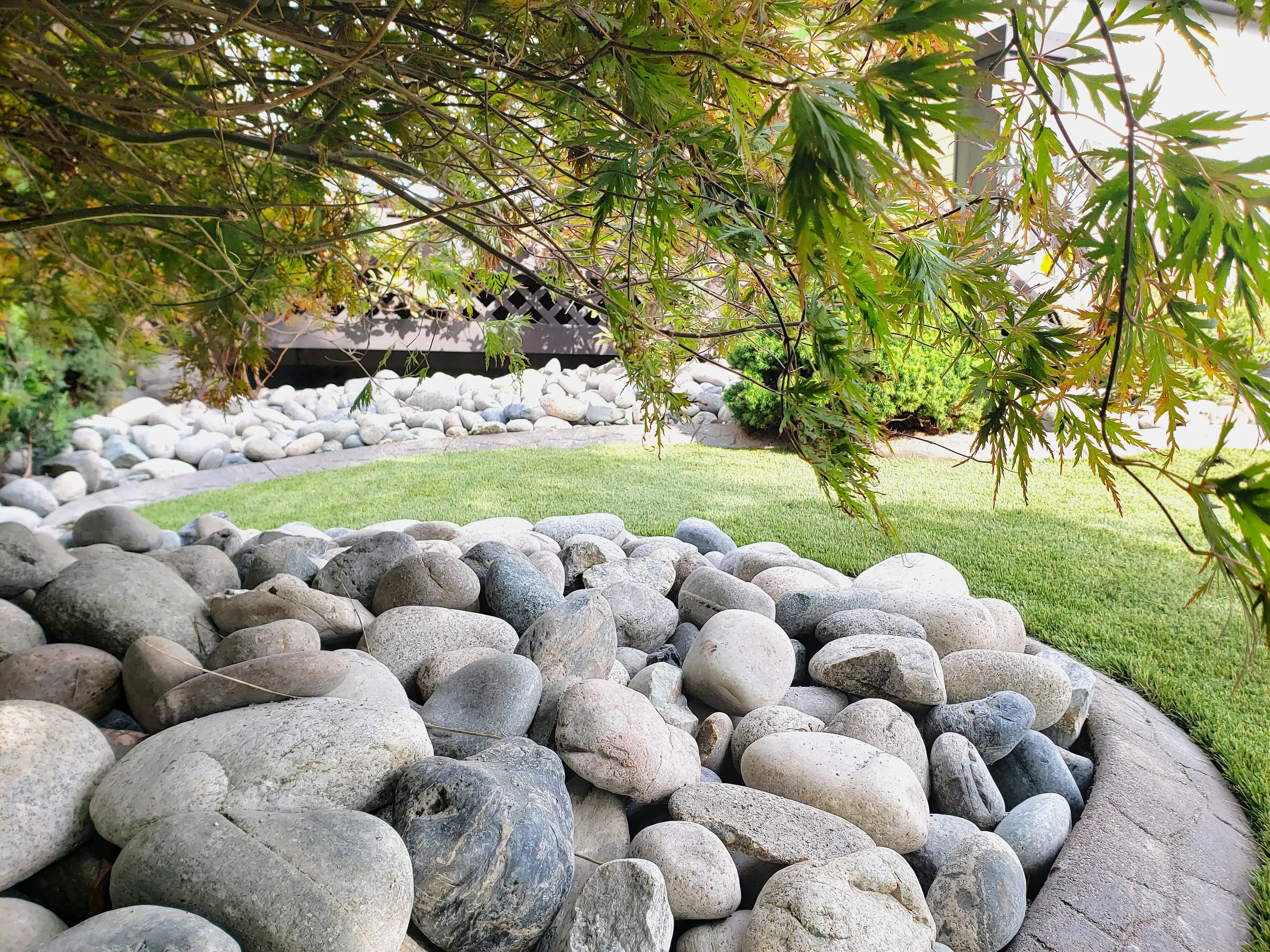
As the leading landscape contractors in the Lower Mainland, we often get asked by homeowners of maximizing a small backyard. Lack of square footage might be considered a hindrance in a great landscape design, but that is not really true. With just the right small yard landscape design ideas, even the tightest spaces can feel intentional, complete, and easy to care for.
After years of landscaping experience, and having worked on large, small, quirky, and unique plots of land, we understand the importance of not trying to fit everything in. The goal is to make a few smart choices: strong planting structure, good use of edges, and materials that hold up in the Lower Mainland climate. The ideas below focus on how to shape the yard and what kinds of plants and features work well in compact spaces.
5 Landscape Design Ideas: How to Design a Small Backyard Landscape?
1. Wrap the Edges With Layered Planting Beds
One of the most effective small yard landscaping designs is simple: keep the middle open and build interest around the edges.
Idea: Plant one or two sides of the yard continuously, layering plants by height and texture. This softens fences, makes the space feel intentionally designed, and leaves the centre free for turf or a patio.
How to set up the bed
Back row (structure): Narrow evergreens or small shrubs that hold their shape year-round. For example:
- Boxwood
- Yew
- Hebe
- Slender cedars (where allowed and appropriate)
Middle row (seasonal interest): Flowering shrubs or perennials such as:
- Hydrangeas
- Spirea
- Echinacea
- Black-eyed Susan
Front row (soft edge): Low ground covers and ornamental grasses like:
- Creeping thyme
- Sedum
- Japanese forest grass
- Dwarf fountain grass
You end up with a border that feels full without taking much depth; often 2–3 feet is enough. In a small yard, it’s that framed edge that gives the space a finished feel instead of “builder basic.”
Note: If you're working with artificial turf, shaping the base so that the turf edge curves smoothly into the bed gives you a clean line that’s easy to maintain and makes the planting feel intentional.
2. Use Artificial Turf (or Hardscape) as the Main Surface and Let Plants Do the Detailing
Many homeowners want low maintenance but still appreciate real plants. You can have both if the main surface is simple and the planting is concentrated.
Idea: Treat artificial turf as the “floor” of the yard and let beds, planters, and feature trees supply the greenery and colour.
This type of low maintenance landscape design keeps weekly work to a minimum:
- No mowing or edging around tight corners
- No muddy patches where kids or dogs run
- Clean, clear lines that allow the plants and features to stand out
You can pair turf with:
- A single Japanese maple or small ornamental tree in one corner
- A line of tall grasses that move with the wind and add privacy
- One or two large statement planters by a seating area
Read Also: Frequently asked questions about Artificial Turf
Ultra-low-maintenance twist: swap some turf for gravel or stone
If you prefer even less upkeep, a small courtyard-style layout can work very well:
- Gravel or large pavers as the main surface
- Turf used in narrow strips or as an accent instead of wall-to-wall
- Potted shrubs and small trees along the edges
Read Also: The Ultimate Guide to Artificial Turf Cleaning & Maintenance
3. Build In Contrast With Textures, Not Just Colours
In small yards, texture often does more for the overall feel than big colour swings. Strong small yard landscaping designs keep the palette tight and play with contrast between materials and foliage.
Idea: Choose three or four key textures and repeat them:
- One main paving surface
- One loose material (gravel or mulch)
- One “feature” material (boulders, wood, or steel edging)
- A couple of distinct plant textures
Examples that work well in tight spaces
Hard textures
- Smooth concrete or large-format pavers for the main patio
- Fine gravel bands between pavers or along the house for drainage
- A few natural boulders or rock outcrops as simple focal points
Plant textures
- Fine and airy: feather reed grass, Japanese forest grass, ferns
- Broad and glossy: laurels, hydrangeas, rhododendrons (in the right light)
- Low and dense: heathers, thyme, creeping jenny
When you repeat these textures, the yard feels calm and intentional. The same gravel might appear beside the house, between raised beds, and under a bench. The same grass variety might show up in two or three clumps rather than ten different plants fighting for attention.
Note: Image Landscaping’s design team can help you choose materials that match your home style—modern, classic, or in between—so you don’t end up with five competing looks in a small footprint.
4. Bring the Design Up With Vertical Elements
Floor space is limited, but vertical space is almost always underused. Great small yard landscape design treats fences, walls, and corners as part of the canvas.
Idea: Add a few vertical features that give privacy and structure without stealing usable ground.
Options that work well in compact yards:
- Trellises with climbers
Clematis, honeysuckle, climbing roses, or evergreen vines can turn a plain fence into a green wall. - Slender trees and columns
Columnar trees, narrow cedars (where suitable), or multi-stem shrubs create height in corners without a wide canopy. - Wall-mounted planters
Shallow boxes or modular planters for herbs, trailing plants, or seasonal flowers.
You can also use vertical elements to frame key views:
- A trellis behind a bench
- A small pergola over a dining nook
- A privacy screen to hide an air conditioner or bin area
Read Also: What types of Fences are best for Privacy in Fraser Valley?
Lighting ties into this idea too. Wall-mounted or fence-mounted lights, string lights between posts, or small spotlights on a feature tree make the yard feel larger and more inviting after dark without needing extra floor space.
Note: As your landscape contractor, we plan full landscape design including turf, raised beds, lighting, and vertical elements in one drawing so everything lines up visually.
5. Add One “Specialty” Feature That Fits How You Live
In a small space, one strong feature usually works better than several half-finished ideas. The right feature depends on how you use the yard day to day.
Idea: Choose a single specialty element that suits your lifestyle and plan the rest of the design around it.
Options that work well in compact yards
- Herb and vegetable raised beds
Narrow cedar beds along the fence with trellises for peas, beans, or cucumbers. Mix in flowers like calendula, nasturtiums, or marigolds so the area looks good even when you’re between harvests.
- A small seating or dining nook
A poured concrete pad or paver square with a built-in bench and planters on either side. For very small yards, a bistro table for two or a corner bench with a small table often works better than a full dining set.
- Family-friendly play corner
A specific area with soft grass beneath the feet; a small, space-saving playhouse; or a small-sized swing or climbing frame. Containing the playground space to one area of the grounds allows the remaining sections to be more easily designed and managed.
- A simple water bowl or fountain
Not a big pond—just a ceramic or stone bowl with a bubbler. Surrounded by gravel and low plants, it adds sound and movement without a lot of maintenance.
- Accent lighting
Low-voltage lights along steps, under bench overhangs, along paths, or in key plants make the yard usable after dark and extend the feeling of space when viewed from inside.
Read Also: 7 Mistakes to avoid when planning a Concrete Project
Bringing It All Together
You don't need a huge property to have a yard that feels finished and easy to live with. A strong small yard landscape design usually comes down to:
- Clear edges and layered planting beds
- A flat, dependable main surface—often artificial turf or a simple hardscape
- A few repeated textures in both materials and plants
- Smart use of vertical space
- One feature that suits how you actually use your yard
Done well, these elements turn small outdoor spaces into clean, functional yards that look good from inside the house, stay usable in all seasons, and don’t eat up every weekend with maintenance.
FAQs About Small Yard Landscape Design
1. How do I start planning a small yard landscape design?
Start by deciding how you would like to use the space most of the time. Choose a single main purpose; play area, quiet seating spot, or low maintenance landscape design with turf and simple beds. From there, decide where the main surface goes, where planting beds make sense, and where a feature like a bench, fire table, or raised bed would fit naturally.
2. Do I need lots of plants for my yard to look finished?
No. A good small yard landscape design often relies on a short, repeated plant list instead of a long, random mix. A combination of evergreens for structure, a few flowering shrubs or perennials, and some grasses or groundcovers is enough to make a small space feel complete without becoming high maintenance.
3. If I like plants, can a small yard still be low maintenance?
Yes. The key is to keep the main surface simple—usually turf or pavers—and group plants in clear beds along the edges. Choose plants that stay compact, match your sun and shade, and handle wet winters. You still get greenery and texture without constant pruning or replanting.
4. Is artificial turf a good idea for a small backyard?
For many homeowners, artificial turf is the easiest way to keep a small yard tidy and usable year-round. It works especially well when kids or pets use the yard often, or when natural grass struggles with shade and drainage. When installed with the right base and slope, turf gives you a clean “floor” while the planting and features provide the character.
5. How long does it generally take to redo a small yard?
Most small yard projects move faster than full-size backyards, especially when the design is clear and the work is handled by one crew. Once the plan is approved, installation time depends on how much excavation, hardscaping, and planting is involved, along with site access. Image Landscaping can walk you through the steps so you know what will happen at each stage.
6. What if my yard is narrow or an odd shape?
Narrow side yards, townhouse patios, and irregular layouts can work very well with a thoughtful small yard landscaping design. In these areas, wrapping the edges with slim beds, using vertical elements such as trellises, and keeping the centre open for turf or a path usually gives the best result. A custom plan turns those quirks into part of the design instead of a problem.
Ready To Talk About Your Small Yard?
If you are standing in your small backyard wondering how to make it work, Image Landscaping can turn these ideas into a clear plan. Our team of expert landscape designers and contractors handles design, grading, concrete work, pavers, artificial turf, and planting so your yard ends up simple to maintain and comfortable to use.
Contact us to share a few photos and details, and we'll put together a small yard landscape design tailored to your space and your daily life built to look good and stay practical in the Lower Mainland climate.
Related articles

.webp)


Request a Free Quote Today
Reward yourself the dream space requiring low-maintenance with our professional landscaping services.
604-427-1747